In the complex landscape of industrial real estate, appraisals are pivotal for both buyers and sellers. They serve as the cornerstone of financial transactions, impacting investment decisions and the ultimate success or failure of a deal. Understanding the value of industrial properties ensures that buyers invest in wisely and sellers obtain fair compensation for their assets. By delving into the nuanced world of industrial real estate appraisals, stakeholders can better navigate the market’s challenges and opportunities. This article aims to highlight the importance of accurate appraisals, common mistakes to avoid, and the systematic process involved in conducting a professional appraisal.
Understanding the Importance of Accurate Appraisals
Assessing Property Value
Accurate appraisals are critical in defining the true market value of industrial properties. Without them, buyers may risk overpaying for a property, leading to diminished returns on investment. Conversely, sellers could end up underestimating their property’s worth, resulting in financial losses. Appraisals also offer a reliable benchmark for securing financing, as lenders rely on these assessments to determine loan values. Therefore, accuracy in appraisals is not only essential but indispensable in facilitating smooth financial transactions.
Appraisals also influence future profitability and the strategic direction of businesses. Industrial properties often serve as key operational hubs; thus, an overrated property might squeeze operational budgets, whereas an underrated one might mask true growth opportunities. Furthermore, appraisals ensure transparency in negotiations, fostering trust between parties. By acknowledging the various factors affecting property value, appraisals provide a comprehensive overview of what constitutes a fair price. As such, understanding the intricate dynamics of property valuation can effectively guide market participants in making informed decisions.
Beyond immediate transactions, accurate appraisals help in long-term business planning. An industrial property’s value impacts various aspects, such as potential tax liabilities and investment strategy adaptations. Inaccurate assessments can skew these plans, resulting in unforeseen challenges down the line. Therefore, engaging with seasoned appraisal professionals with deep market insights is essential to anticipate future market shifts accurately. Only through precise appraisals can business leaders make informed decisions that support sustainable growth.
Common Mistakes and Misconceptions
Avoiding Overvaluation or Undervaluation
Common errors in the appraisal process can lead to significant financial repercussions. One prevalent mistake is the overvaluation of properties, sometimes driven by emotional investments or misplaced optimism regarding market growth. Overvaluation can deter potential buyers, prolonging property listings, or lead to substantial financial adjustments if detected late. Similarly, undervaluation might appeal to quick sales, but it undercuts the true potential and worth of the property. Both scenarios illustrate the delicate balance an accurate evaluation maintains, emphasizing the need for professional and objective appraisals.
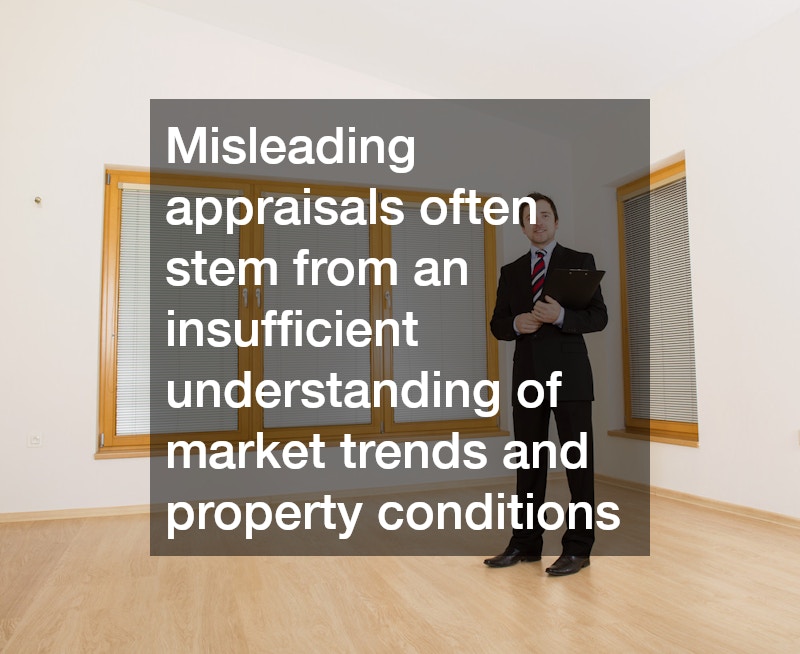
Misleading appraisals often stem from an insufficient understanding of market trends and property conditions. Many stakeholders inadvertently overlook factors such as location significance, structural integrity, and zoning regulations—elements that significantly influence a property’s market standing. A comprehensive appraisal considers these dynamics, yet misconceptions can alter this understanding, causing stakeholders to focus on superficial elements like aesthetics or preliminary offer prices. Robust education on appraisal nuances and embracing a detail-oriented approach is paramount to avoiding such pitfalls.
Often, stakeholders misjudge the criticality of timings, leading to hurried or misinformed appraisals. Market fluctuations can sometimes compel buyers or sellers to expedite decisions, neglecting thorough appraisal procedures in the process. However, timing is crucial in accurately assessing a property’s worth, as market conditions and economic indicators continuously evolve. Therefore, ensuring the appraisal occurs under optimal conditions—when detailed data is available—enhances accuracy and relevance. Acknowledging this necessity can mitigate risks associated with improper valuation outcomes.
The Process of Industrial Real Estate Appraisals
Steps Involved in an Appraisal
The appraisal process is methodical and encompasses several critical steps, ensuring thorough and accurate evaluations. Initially, appraisers undertake a detailed analysis of the subject property, factoring in its size, condition, location, and utility. Advanced methodologies, such as comparing similar property values, market trends, and income potential, are employed during this phase. By using modern toolsets and statistical models, appraisers can generate an unbiased and data-backed valuation. This rigorous analysis forms the foundation of a robust industrial real estate appraisal.
In addition, appraisers conduct site visits to evaluate the property’s physical conditions and any unique characteristics. This on-the-ground assessment helps in identifying potential issues or value-enhancing features not evident in documentation alone. The site evaluation involves examining structural conditions, compliance with zoning laws, and checking for environmental considerations. These observations are meticulously recorded, adding depth to the overall appraisal. By aligning visual inspections with documented data, appraisers achieve a holistic and credible property valuation.
The final step involves compiling the collected information into a comprehensive report that clearly details the appraiser’s findings and valuation conclusions. This report serves a dual purpose: it acts as a crucial document for financial negotiations and decision-making, and it also provides transparency regarding the property’s assessed condition and market context. Stakeholders depend on this document to strategize and operate within the real estate arena effectively. As such, a professionally executed appraisal process delivers substantial value, driving informed business decisions.
Industrial real estate appraisals play a fundamental role in safeguarding stakeholder interests in a competitive market. By highlighting the intrinsic value of properties, these assessments ensure fair transactions and strategic decision-making. Common appraisal errors can instigate significant financial fallout, stressing the need for meticulous evaluation and an objective approach. Whether buying or selling, leveraging professional appraisal services offers immense benefits, guiding stakeholders towards informed and judicious investments. Ultimately, an accurate appraisal represents more than a number—it embodies strategic foresight and market comprehension.